Elena Günther · 16 September 2026
Analyzing the Effects of Infrastructure Changes on Niche Website Performance and Recovery Timelines
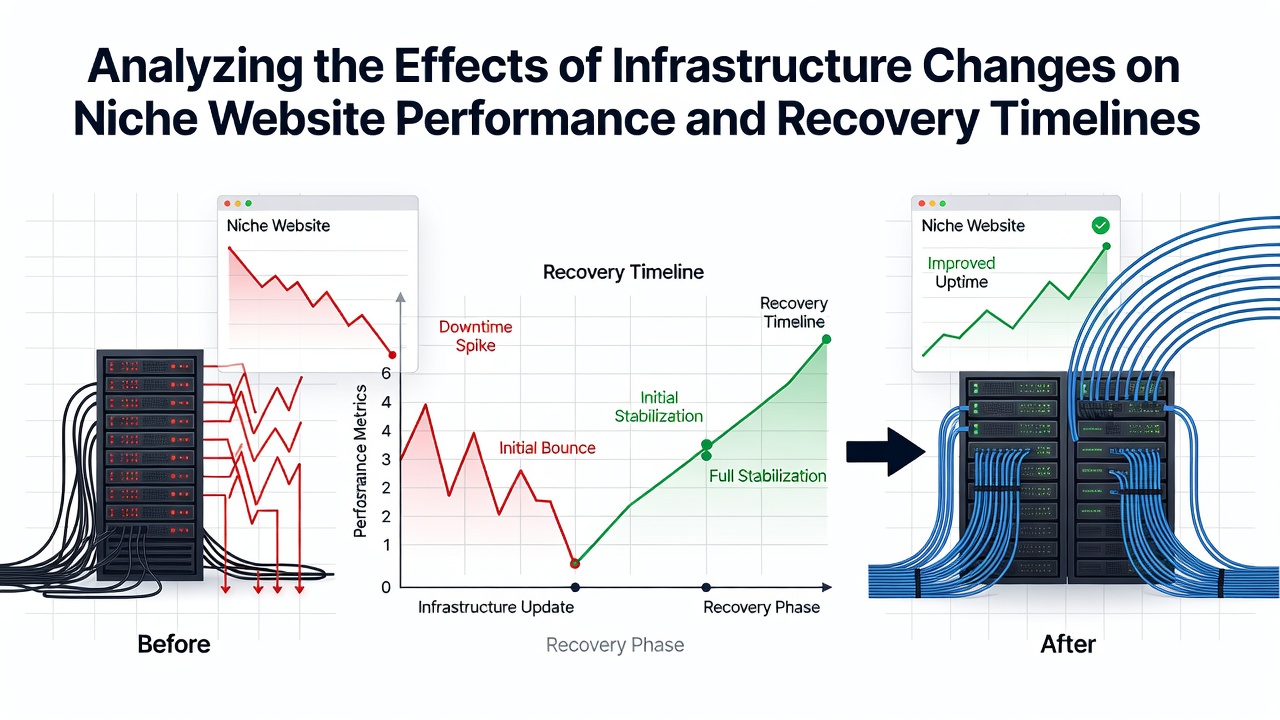
Website operators who manage niche platforms often encounter infrastructure shifts that alter everything from load speeds to search visibility, while recovery periods depend on the scale of each modification and the site's existing setup. These adjustments include DNS record updates, hosting provider switches, content delivery network additions, and content management system migrations, each carrying measurable impacts on performance indicators such as page load times, uptime percentages, and organic traffic volumes.
Common Infrastructure Modifications in Niche Environments
Niche sites, which typically focus on specialized topics with narrower audiences, experience distinct challenges during infrastructure updates because their traffic patterns rely heavily on consistent indexing and fast response rates. DNS changes frequently occur when domains transfer between registrars or when name servers receive new configurations, leading to propagation delays that range from minutes to several hours depending on time-to-live values. Hosting migrations involve moving files and databases to different servers, which can temporarily disrupt availability until caches clear and search engines re-crawl updated IP addresses. Content delivery network implementations add edge servers to distribute static assets, improving delivery speeds in remote regions while requiring careful configuration to avoid duplicate content issues.
Performance Metrics Affected by These Shifts
Data collected across multiple platforms shows that server response times often increase by 200 to 400 milliseconds immediately following a hosting change, according to benchmarks from the Canadian Digital Technology Adoption program reports. Niche sites with limited resources face longer indexing gaps because crawlers prioritize larger domains, resulting in temporary drops in impressions that last between two and six weeks. Uptime figures typically dip below 99 percent during the transition window, yet sites that maintain proper redirects and monitor server logs recover faster than those without monitoring tools in place.
Content management system migrations introduce additional variables because database structures and URL patterns may change, which forces search engines to re-evaluate page relevance and can extend recovery timelines beyond standard expectations. Observers note that sites updating from older platforms to modern frameworks often see initial speed gains once optimizations complete, yet the process requires coordinated testing of plugins and themes to prevent errors that compound visibility losses.
Recovery Timelines and Influencing Factors
Recovery durations vary widely based on site age, backlink profile strength, and the thoroughness of pre-change preparations, with smaller niche properties sometimes requiring up to three months before traffic stabilizes at previous levels. Researchers tracking website transitions have identified that proactive steps such as submitting updated sitemaps and requesting re-indexing through search console tools shorten these periods by an average of 40 percent. Geographic distribution of visitors also plays a role, since changes affecting regional servers delay recovery for audiences in distant locations until global propagation finishes.
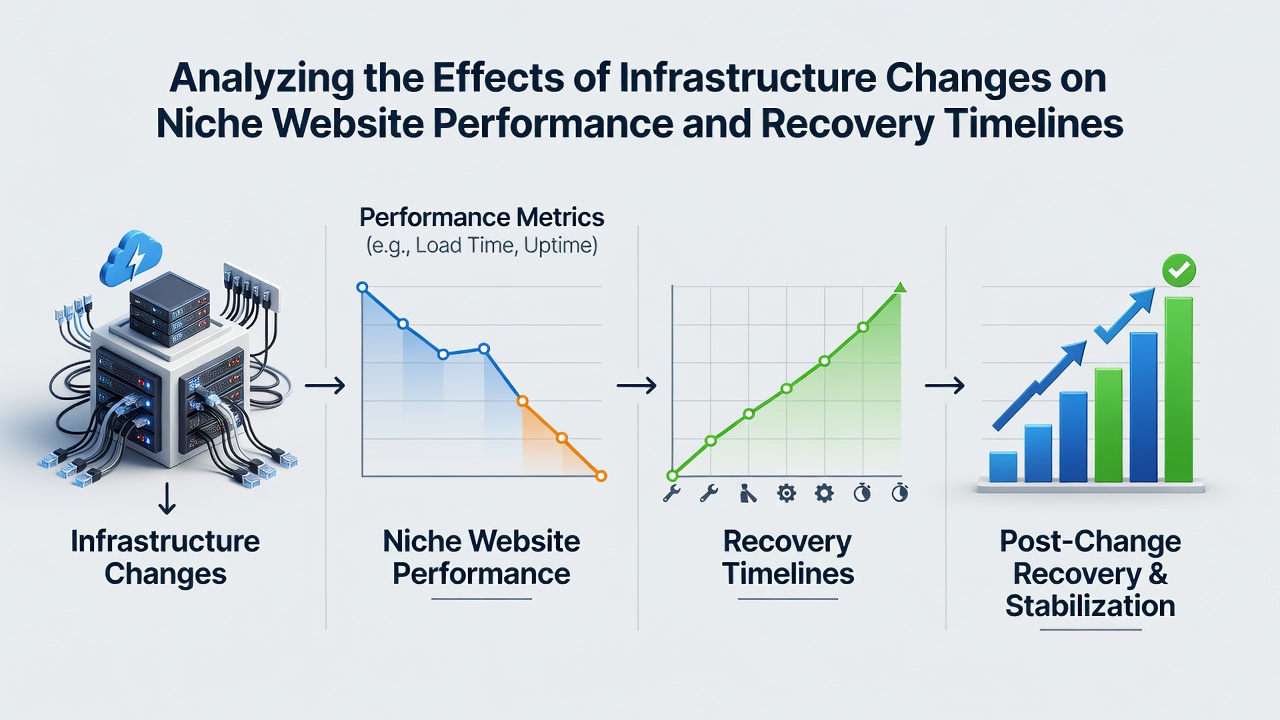
As of September 2026, aggregated figures from industry monitoring services indicate that sites implementing CDN layers alongside hosting moves achieve median recovery within 18 days, whereas those handling isolated DNS adjustments stabilize within five to seven days. External factors like concurrent algorithm updates from major search engines can extend these windows, making it essential for operators to review server logs daily during the initial two-week period after any infrastructure adjustment.
Case Patterns Observed Across Specialized Platforms
One documented instance involved a hobbyist forum focused on vintage machinery that underwent a full server migration in early 2025, during which average page load times rose from 1.8 seconds to 3.4 seconds before optimization routines brought figures back below two seconds within 22 days. Another example featured a regional cooking resource that added a content delivery network, resulting in a 35 percent reduction in bounce rates for international readers once edge caching activated fully. These patterns demonstrate how preparation steps, including staging environments and incremental rollouts, directly influence both performance stability and the length of adjustment phases.
Additional variables include the volume of dynamic content and reliance on third-party scripts, both of which amplify the effects of infrastructure changes because each element must be re-validated after the move. Operators who conduct load testing prior to live deployment reduce unexpected slowdowns, while those who skip such checks encounter extended periods of degraded user experience that further delay full recovery.
Conclusion
Infrastructure modifications continue to shape the operational landscape for niche websites through measurable effects on speed, availability, and visibility, with recovery timelines shaped by preparation quality, change complexity, and external monitoring practices. Data from multiple regions shows consistent correlations between methodical execution and shorter adjustment periods, providing operators with clear benchmarks for planning future updates. Continued observation through September 2026 and beyond will likely refine these patterns as new tools and protocols emerge in web infrastructure management.